A Rainy-Day Indoor Gathering, Arranged for Ease
Plan a rainy-day indoor gathering with clear arrival details, a workable coat-and-bag plan and an easy opening activity that helps guests settle in.
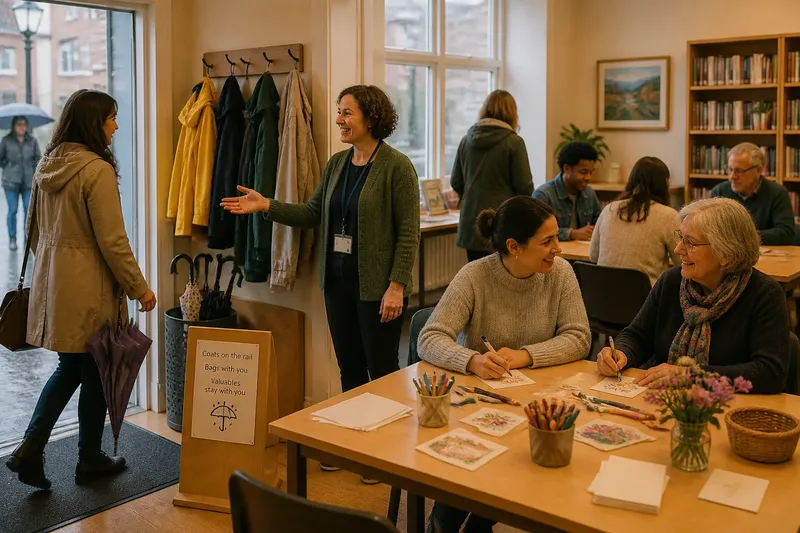
A rainy-day indoor gathering needs a clear plan for wet coats, umbrellas and the first activity. Give guests useful information before they travel, then make the room easy to join even if arrivals are scattered.
Imagine a neighbourhood group holding a Saturday craft-and-chat afternoon in a hired library meeting room. It has a public entrance, a small lobby, a coat rail, several tables and a staff-only corridor; the organiser cannot know exactly when guests will arrive or how much wet-weather gear they will bring.
The aim is not to choreograph every guest. It is to reduce uncertainty, keep damp belongings away from activity materials and let people take part without waiting for a formal start.
Send clear arrival details
Write the arrival message before arranging the room. “Meet inside the library” leaves guests guessing about the right door, the room’s location and where wet coats belong.
Use the group’s usual communication channel and repeat the essentials in the reminder. Include the venue name, public entrance, a recognisable landmark, directions to the room, the arrival period, whether late arrivals can join and a way to contact the organiser.
- Check which entrance is open to the public; if the building has separate staff or delivery doors, name the correct one, otherwise give a nearby landmark.
- Check whether guests can follow venue signs to the room; if the route is clear, describe it briefly, otherwise ask venue staff for directions to share.
- Check what coat and umbrella storage the venue permits; if an approved rail or container is available, name it, otherwise tell guests to keep their belongings with them.
- Check whether the activity can accept late arrivals; if it can, say guests may join during the opening period, otherwise state the start time and ask them to contact the organiser.
- Check how guests can reach the host if they get lost; if a contact method is available, include it, otherwise ask the venue for an appropriate point of contact.
- Check whether bags can be kept by seats without obstructing movement; if they can, explain where, otherwise ask guests to keep them close and follow venue directions.
For the imagined library gathering, the organiser sends: “Use the main library entrance on the square, then follow the community-room signs. Coats can go on the rail beside our room; keep bags with you or under your chair if they do not obstruct the route. Drop in during the opening period, and message the host if you cannot find the room.” The expected result is that guests know where to go and what to do with belongings, without being promised secure storage or a dry route.
Confirm directions, access arrangements and storage rules with venue staff before sending the message. Do not assume that a corridor or staff-only area can be used for waiting or bags.
Plan for wet belongings
Decide how wet coats and umbrellas will be handled before setting out paper, craft supplies or food. Put the approved coat rail or storage area where guests can reach it without disrupting the activity, and keep wet outerwear separate from materials that should stay dry.
In the imagined library, the organiser confirms that the rail beside the meeting-room entrance is available. They place a simple sign near it, leave the approach unobstructed and keep craft materials on tables away from coats; umbrellas go only in a venue-approved container or remain with their owners.
Make the limits clear: a shared rail is not secure storage, and guests should keep valuables with them. If the room lacks suitable storage, ask the venue about an approved alternative rather than making a pile in a corridor.
Check each proposed place for belongings against the room’s intended use. If bags beneath chairs would obstruct movement, choose another venue-approved arrangement.
Keep the opening flexible
Make the first activity easy to understand and join without waiting for everyone to be seated. A late guest should be able to see what is happening and take part with a brief explanation.
For the imagined craft-and-chat afternoon, the organiser puts out cards and drawing materials for an optional greeting activity. One host welcomes people and explains the activity; a second volunteer, if available, answers questions about the room and the coat rail. The shared activity begins after people have had time to settle.
If arrivals run late, keep the optional activity open and shorten the introduction rather than rushing the main activity. Tell guests what they can do now and what will happen next; flexibility should not leave them guessing.
Questions about rainy-day gatherings?
Where should wet coats go?
Use a storage area approved by the venue and tell guests where it is before they arrive. Make clear that shared coat storage is not secure, so valuables should stay with their owners.
What if guests arrive at once?
Keep the first activity available for people to join and give directions in a short, repeatable phrase. If the room becomes crowded, pause the activity and ask venue staff about an approved adjustment rather than using a corridor as overflow space.
How can late arrivals join in?
Choose an activity with a visible starting point and supplies that remain available. Give latecomers a brief explanation without stopping everyone else.
What if the room feels too crowded?
Stop any activity that gathers everyone in one place and check with the venue contact about suitable changes. Simplify or move the activity only within the space the venue has approved.
Review the room afterwards
After the imagined gathering, the organiser notes whether guests found the directions, whether the approved coat rail remained usable and whether late arrivals could join the card activity. If the rail was awkward to reach, they ask the venue about another approved location before planning the next event.
For a rainy-day indoor gathering, the useful review is specific: record which instruction guests needed, where wet belongings accumulated and whether the opening activity worked for people arriving at different times. Use those observations to adjust the message or room plan, while keeping venue rules and clear access routes in view.